The deeper you go, the stranger it gets. Yes, we are talking about the ocean!
Since the emergence of anglerfish on the ocean’s surface and other eerie encounters, Earth’s oceans have become the latest attraction. Scientists agree that the deep sea is less explored than the moon’s surface, and every expedition seems to turn up something new, something eerie, and sometimes that defies explanation. If you think haunted houses are creepy, try the cold silence of a mile beneath the surface, where light doesn’t reach and sound behaves differently.
One of the most disturbing mysteries is the phenomenon of deep-sea “brine pools.” These are lakes within the ocean. Formed by high-salinity water so dense it doesn’t mix with the rest of the sea, these pools appear otherworldly. Encircled by peculiar biological life unique to Earth, they are smooth, reflective surfaces. Some even contain bubbling “domes” that react to disturbances. What’s under these pools? No one knows. Plus, they’re too toxic for normal submersibles to explore.
Then there are the “zombie worms.” Discovered near whale falls, these creatures bore into bones and feed on the fats within. They have no mouths, no stomachs. Only acid-secreting tissues that dissolve bone. While there are many wonders in nature, zombie worms seem like pure horror.
But perhaps the most spine-tingling mysteries are the ones we can’t quite explain.
The soundscape of the deep ocean is filled with oddities. NOAA has cataloged dozens of unexplained underwater sounds, like “Upsweep,” “Whistle,” and the infamous “Bloop.” The Bloop, recorded in 1997, was a massive ultra-low frequency noise originating in the South Pacific. This sound was so powerful that it was picked up over 3,000 miles away. It resembled biological patterns but was far too loud to belong to any known sea creature. No one has definitively identified its source.
In other cases, deep-sea drones and submersibles have caught glimpses of enormous shapes disappearing into darkness. Massive, fast-moving shadows that seem to evade detection. Entire research crews have reported the feeling of being watched, as if something just beyond the range of vision was following their vessel.
Then there are the sightings of supposed “structures” on the ocean floor. Circular formations with geometric patterns, pillars rising hundreds of feet, and even rectangular depressions resembling ancient roads or platforms. While scientists quickly label these “natural geological formations,” they often remain unexplained due to a lack of access and extreme depths.
In the Mariana Trench, new fish species have been discovered with translucent skin, skulls that resist crushing pressure, and eyes adapted to absolute darkness. Some life forms even exhibit bio-luminescence that seems to communicate across long distances. What are they signaling? Who—or what—is listening?
These stories might sound like science fiction, but are grounded in real reports, data, and fear. The ocean is beautiful, but it’s also alien, ancient, and possibly home to secrets we’re not ready to face.
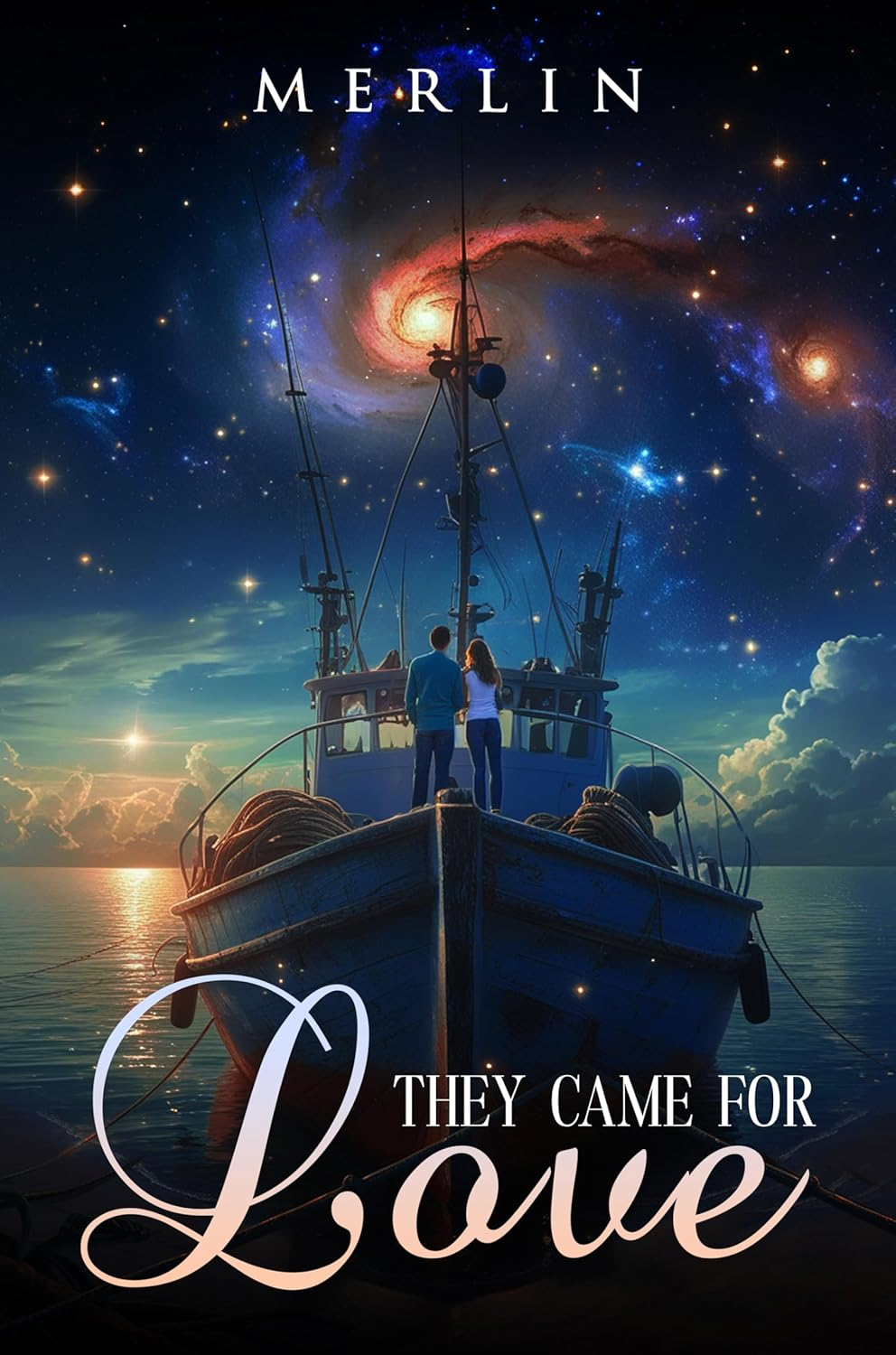
They Came for Love comes into play at this point. This maritime thriller blends everyday life aboard a shrimping boat with the unnerving discovery of something unexplainable in the sea. When sonar starts picking up strange signals and the crew’s world begins to unravel, the line between fact and fear blurs in chilling fashion.
If you’ve ever stared out at the ocean and felt both awe and dread, this book will speak to you. It captures the suspense of being at sea in the best way possible and will keep you hooked.
Dive into They Came for Love. The ocean is waiting.